Showing posts with label 9/11 Literature. Show all posts

Sunday, May 15, 2011

Oskar's Mom: Searching and Loss in "Extremely Loud and Incredibly Close"

Words Words Words
I'm not big on announcing "SPOILER ALERT!" but be that as it may, don't read this brief piece on Jonathan Safran Foer's 2005 novel unless you're okay with knowing some things that happen in the end of the book.  Or, in other words: Spoiler Alert.

Oskar Schell never considers himself a detective in Extremely Loud and Incredibly Close.  He's not looking for the solution to a mystery, and instead characterizes his travels around New York City as "my search," telling people he meets that he's merely "looking for a lock."  Of course, what we learn throughout the novel is that the search itself gives Oskar a means of carrying on a day-to-day life in the absence of his father.  It gives him a means of ordering and calming his otherwise inchoate body of symptoms (self-bruises, tics, obsessions about 9/11 and clothing and death, etc).  Oskar fears that the conclusion of his search ostensibly forecloses the possibility of proximity (ie: his extreme closeness) to his father.  Once Oskar finds the lock he worries aloud to his grandfather: "I found it and now I can't look for it [...] Looking for it let me stay close to him for a little while longer" (304).  Finding the lock could never have been as important as engaging in the process of endless searching.

Sunday, May 8, 2011

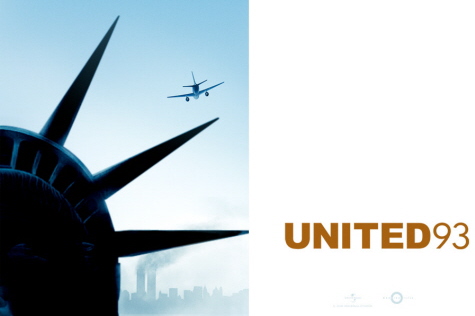
"United 93" and OBL

 
There are a lot of reasons to think about Paul Greengrass's 2006 United 93--not least of which is the film's complicated portrayal of Islam.  Here's my best effort when it comes to relating the movie to last week's events.

Since Osama bin Laden’s death last week, a part of the national conversation has been dedicated to determining how “we” are supposed to feel.  It’s a dilemma.  What emotions are appropriate this kind of event?  Ambivalence?  Relief?  Joy?  Satisfaction?  Perhaps more interestingly, the question of how to feel has often been framed as an accusation.  That is, it’s seemed quite common to hear people asking: “What emotions are inappropriate for this kind of event?” in an effort to disavow certain sets of reactions. I wonder why accusations of emotional immaturity and wrongheaded patriotism have been heaped with such vehemence upon crowds of White House and Times Square “OBL” revelers.  And I want to suggest that the narrative function of United 93 is in part to give us fictional space to experience these emotions without having to avow them.

Monday, May 2, 2011

The 9/11 Commission Report as Memorial


The 9/11 Commission Report stands as the government’s official take on “what happened” almost ten years ago on that infamously beautiful day on the Eastern Seaboard.  Perhaps surprisingly, it also stands as one of the most engaging narratives about the history of Al Qaeda and America’s counter-terrorism efforts.  It’s really well written—a fact that surprised many critics when it was first published.

In light of last night’s events—a kind of strange kickoff of the nation’s Tenth Anniversary of 9/11 pensiveness—I have been thinking about other ways to think of the report.  Perhaps we can think of the report, less as a government document, or even as a work of literature.  It’s an instruction manual on what, why, and how we should respect the authority of the state.  In effect, the report acts as a kind of memorial to September 11.  Memorials establish the rules for what constitutes citizenship, and confirm our participation in a fantasy of national belonging.  When thought of as a memorial, it seems possible to suggest a broader importance for this government document.

Sunday, April 24, 2011

Newspapers in "Falling Man"


Trying to combine the last two posts together a bit.  Don DeLillo's 9/11 novel Falling Man thinks a lot about the relationship between the individual and the historical, but in a way that is much different from Junot Diaz and Jennifer Egan.  Here the concern is about the relationship between individuals and an exemplary/spectacular/singular event.  How does an individual's relationship to a historical event like 9/11 differ from that individual's relationship to the ongoing narrative of a continuous history?  I think the novel helps us address some of these questions, while at the same time providing some insight on how newspapers mediate the transition from post-trauma to ordinary life.  Or something.  I'm really tired.

Don DeLillo's Falling Man presents characters with different relationships to visual, literary, and performance art.  The novel meditates on the ability of different genres and forms of art to mediate trauma--to help characters work through the aftermath of the terrorist attacks.  Meanwhile, the novel itself attempts to work in different genres.  The staccato, stilted dialogue of the characters often seems more like terse poetry than realistic portrayals of conversations; and (as we discussed in class), the tightly stylized form of the book resembles a self-contained still life.  In other words, Falling Man engages with questions about the usefulness (uselessness) of artistic forms as means of smoothing the transition from trauma "back to" ordinary life.

Sunday, April 17, 2011

Does Dave (only) Tell us How it Feels to Him?


I have been writing and thinking about terrorism, ordinary life, patriotism, trauma, and collective identity a lot in the past two years. (Again, really, I'm a happy person in general disposition). This week I reread The View from Mrs. Thompson's, a brief essay by (I know, I know) David Foster Wallace. In light of the official publication of his posthumous novel The Pale King this week as well as the beautiful Jonathan Franzen essay in The New Yorker--and because I just realized (reading this thing for the tenth time is no less heartbreaking, of course) that he "gets" the things I wanted to "get" better in four pages than I did in thousands of writing, reading, revising, rehashing, suffering through--here are a few thoughts on Dave's account of "The Horror."


In the first half of his essay "Tell me How Does it Feel?" James Wood indicts novelists interested in writing the "Great American Social Novel," claiming: "they will sooner or later be outrun by their own streaking material." In other words, a writer attempting to capture the totality of a social moment--its interpersonal, economic, demographic, horticultural (etc) elements—will always fall short of actually describing the world. And worse, in the process of trying to do so, she will also fail to document anything essential about human feeling. Yet Wood seems to rely on the assumption that human feeling should reside solely within the world that the author portrays. He ignores the possibility of locating feeling within the narrative voice.


I’m not sure if this perspective necessarily addresses Wood’s concerns—and perhaps it merely suggests that writers are vain and solipsistic and can only talk about the interior landscape of their own heads. But if this portrayal is honest and curious, and conducted with the interest of connecting the writer to a reader, is it something we should lament?


In The View from Mrs. Thompson's
, David Foster Wallace takes it as a given that it would be impossible to describe all of the elements necessary to understand how to synthesize the feelings induced by the terrorist attacks of September 11, 2001. The piece does not attempt to portray the totality of the moment; rather, by cataloguing details he observes from the ordinary lives of individuals in Bloomington, Wallace in effect tries to at least give the reader an understanding of how he makes an effort to cope. He describes some conditions “on the ground” in Bloomington--but does so in order to give readers insight into the only consciousness that he feels able to occupy in the wake of “the Horror”: his own.


Tuesday, January 25, 2011

The Onslaught of the "Best Books About 9/11"

It's inevitable. Come September, we will be awash in a national project of stock-taking--a look back at the previous ten years on the anniversary of the September attacks of 9/11/2001. It seems useful to think about what will be the value of these collective considerations. I wonder whether the two camps that formed in the wake of the attacks have softened a bit. There were those who believed 9/11 changed essentially everything, and those who believed 9/11 changed essentially nothing--is it time that we all agree that neither is the case, but that something happened? If we can, I think we can move on to helpful questions about what art and literature is doing to help us think about the politics and culture of "The Post-9/11 Moment" as a historically bound phase in American identity. Deborah Eisenberg's wonderful collection Twilight of the Superheroes helps us understand what it means to move beyond a nationally post-traumatic stage and move to work 9/11 into something like a collectivized memory (even though you probably won't see it on Top Ten Books About 9/11 lists that are guaranteed to materialize).

Ten years after "the events of 9/11," I think two pertinent questions have evolved, both of which help us understand how cultural/national trauma gets absorbed at the level of individuals

What was the post-9/11 moment? What was special about American politics and culture during a period that followed 9/11/2001? How were particular strategies and tactics mobilized to achieve certain cultural and political objectives? How did these strategies and tactics wane over time? Is the post-9/11 moment something that could ever end?

How did the Post-9/11 Moment structure our thinking about the "event" itself? This is related to the possibility of ever being anything other than Post-Traumatic in the wake of the attacks. The "Post-9/11 Moment" might be thought of as a period that begins with standardized modes of national grief and moves to the recent past, where 9/11 is taken as a kind of given in the American consciousness. Perhaps the Post-9/11 moment was the period during which this shift took place.